Why Indian Wedding Traditions Vary So Much
Three forces shape how a wedding looks and feels in India. Understanding them is the key to almost everything else in this guide.
Geography and regional custom
A wedding in Rajasthan carries different rituals, attire, and food from one in Tamil Nadu or Assam — even when both couples follow the same religion.
Language, local folklore, climate, agricultural calendars, and centuries of regional practice all leave their mark. That's why "Punjabi wedding rituals" and "Bengali wedding customs" return such different answers from a general "Hindu wedding rituals" search.
Religion
India is home to Hindu, Muslim, Sikh, Christian, Jain, Buddhist, and Parsi wedding traditions — each with its own sacred texts, officiants, and rites of passage.
- Hindu — centers on the saat phere around a sacred fire
- Muslim nikah — a contractual ceremony based on mutual consent (ijab-o-qubul), witnessed and documented
- Sikh Anand Karaj — around the Guru Granth Sahib with four laavan (circling hymns)
- Christian — church ceremony with vows and an exchange of rings
- Parsi — distinctive rituals like the Ses ceremony and tying of a ceremonial thread
Each tradition has its own internal logic. None of them can be fully understood by treating "Indian wedding" as one interchangeable category.
Community and caste traditions
Even within a single religion, practices differ by community and mother tongue. A Bengali Hindu wedding and a Tamil Brahmin wedding share a faith but look quite different in ritual sequence, attire, and food.
Details can be as specific as whether turmeric paste is applied as a solo or communal ritual, or whether the feast is served on a banana leaf or a thali.
Common Threads Across Indian Weddings
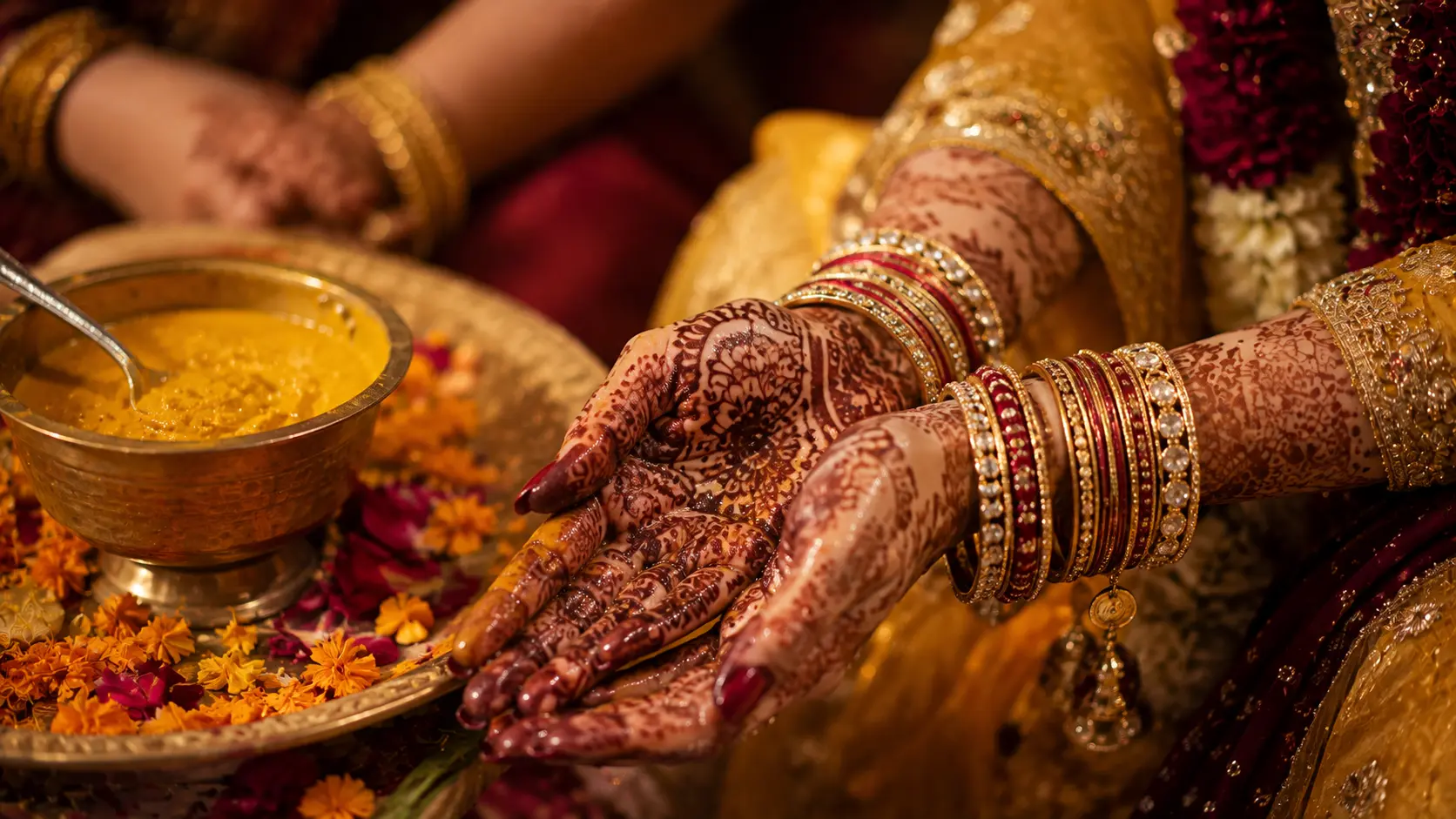
Despite this diversity, a few elements recur across most Indian wedding traditions, even if the specifics differ by region and religion:
- Pre-wedding beautification rituals — most traditions include some version of a haldi (turmeric) ceremony, believed to bless and purify the bride and groom before the wedding, along with a mehendi (henna) ceremony for the bride, often accompanied by music and dance.
- A sangeet or music night — a celebratory evening of singing and dancing, especially common in North Indian and Punjabi weddings, though increasingly adopted across regions and even religions as a modern addition to the celebration.
- A formal ceremony witnessed by family and community — whether it's phere around a fire, laavan around scripture, vows in a church, or a nikah contract, nearly every tradition treats the wedding as a communal, witnessed event rather than a private one.
- A farewell ritual for the bride — most traditions include an emotional departure custom (vidaai in North Indian Hindu weddings, for example) marking the bride's transition from her parental home to her marital one.
- Multi-day celebrations — Indian weddings, across nearly every region and religion, tend to unfold over several days rather than a single event, with distinct rituals assigned to each day.
These shared threads are useful context, but the real richness is in the differences — which is exactly what the region and religion guides in this section are built to explore in depth.
Exploring Wedding Traditions by Region
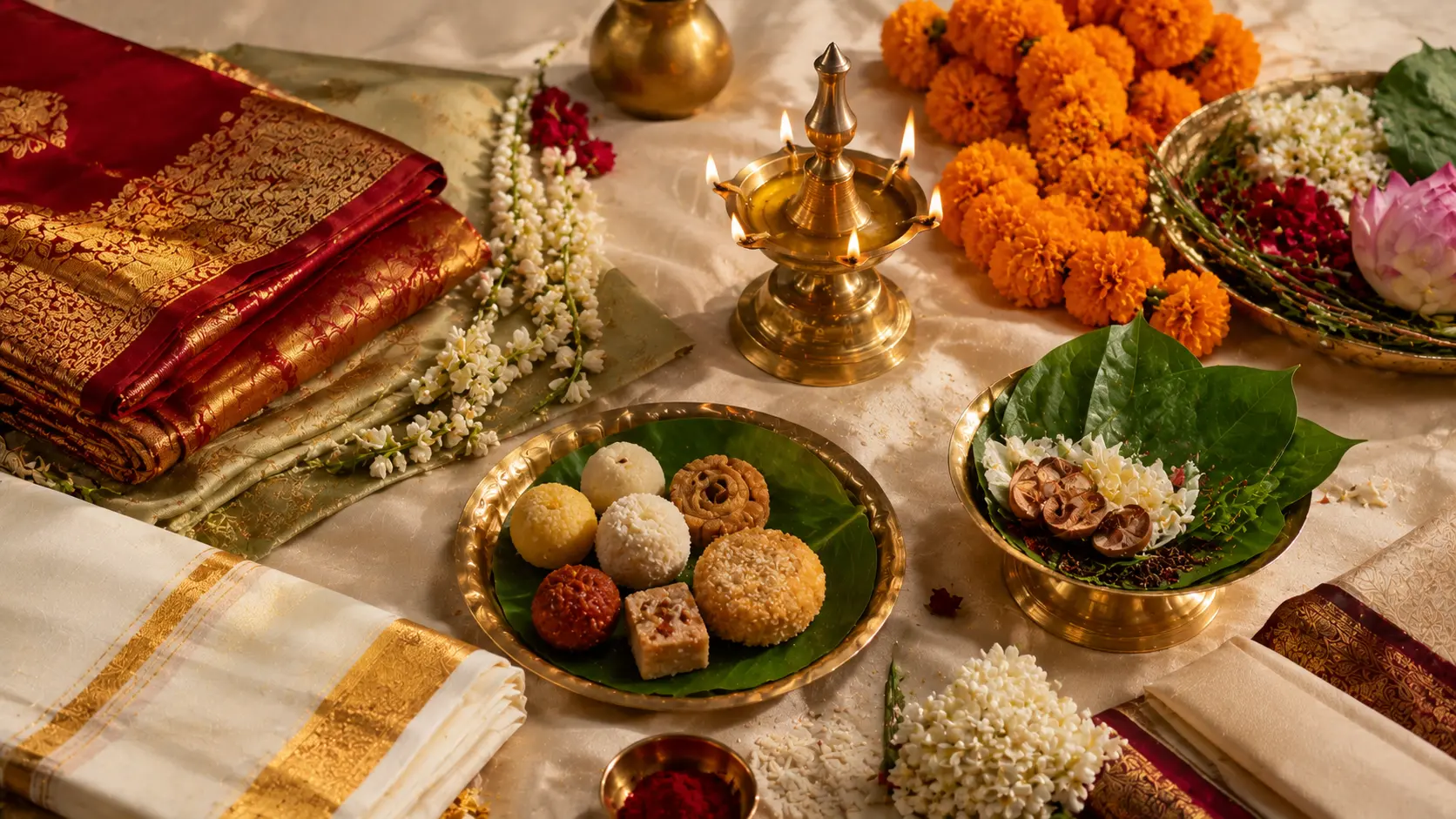
India's wedding customs are best understood in four broad regional clusters, each covered in its own dedicated guide as this section grows.
North & West India
This belt covers Jammu and Kashmir, Himachal Pradesh, Punjab, Haryana, Uttarakhand, Uttar Pradesh, Rajasthan, Gujarat, Maharashtra, and Goa.
It's known for:
- Elaborate, multi-day celebrations
- Folk music and dance — Punjabi giddha and bhangra, Rajasthani ghoomar
- Richly embroidered bridal attire in bandhani, gota-patti, or zardozi
Punjabi weddings are known internationally for their scale and energy. Rajasthani and Gujarati weddings carry strong royal and folk-art influences in decor and rituals.
- Jammu and Kashmir Wedding Traditions →
- Himachal Pradesh Wedding Traditions →
- Punjab Wedding Traditions →
- Haryana Wedding Traditions →
- Uttarakhand Wedding Traditions →
- Uttar Pradesh Wedding Traditions →
- Rajasthan Wedding Traditions →
- Gujarat Wedding Traditions →
- Maharashtra Wedding Traditions →
- Goa Wedding Traditions →
East & North-East India
This region covers West Bengal, Bihar, Jharkhand, Odisha, Assam, Meghalaya, Nagaland, Manipur, Mizoram, Tripura, Arunachal Pradesh, and Sikkim — a belt of striking contrasts.
- Bengali Hindu weddings — rituals like Shubho Drishti (the couple's first ceremonial glance) and the Bou Bhaat reception
- Bihari and Maithil weddings — distinct sequences including the Kohbar ceremony and Sindoor Daan
- North-East communities — many in Nagaland, Meghalaya, Mizoram, and Arunachal Pradesh follow tribal marriage customs shaped by local animist or Christian influences, separate from mainland Hindu or Muslim traditions
- West Bengal Wedding Traditions →
- Bihar Wedding Traditions →
- Jharkhand Wedding Traditions →
- Odisha Wedding Traditions →
- Assam Wedding Traditions →
- Meghalaya Wedding Traditions →
- Nagaland Wedding Traditions →
- Manipur Wedding Traditions →
- Mizoram Wedding Traditions →
- Tripura Wedding Traditions →
- Arunachal Pradesh Wedding Traditions →
- Sikkim Wedding Traditions →
South India
South India covers Tamil Nadu, Kerala, Karnataka, Andhra Pradesh, and Telangana. Weddings here emphasize Vedic ritual precision, temple traditions, and ceremonies that closely follow ancient Sanskrit scripture.
Distinctive customs include:
- Tamil Nalangu — a playful post-wedding ritual for the couple
- Kerala Sadhya — an elaborate vegetarian feast on a banana leaf
- Nine-yard Kanjeevaram or Mysore silk sarees for brides
- Andhra and Telangana multi-day rituals like Pellikuthuru and Pellikoduku, honoring bride and groom separately before the main event
- Tamil Nadu Wedding Traditions →
- Kerala Wedding Traditions →
- Karnataka Wedding Traditions →
- Andhra Pradesh Wedding Traditions →
- Telangana Wedding Traditions →
Culture by Religion
Each faith has its own dedicated guide covering ceremony structure, pre-wedding rituals, and symbolic customs — independent of regional variation, though practices are also shaped by where they're observed.
What You'll Find in Each Regional and Religious Guide
As we build out this section, every state and religion page will cover the same depth of detail, so you can compare traditions consistently across the site:
- Rituals and ceremony structure — the full sequence of pre-wedding, main-day, and post-wedding rites, explained in the order they actually happen, not just listed alphabetically.
- Traditional attire — what the bride, groom, and sometimes even close family traditionally wear, including regional variations in color, fabric, drape style, and jewelry.
- Wedding food and sweets — the dishes and sweets considered essential to that region or community's wedding feast, including any ceremonial foods tied to specific rituals.
- Music and folk traditions — the songs, instruments, and performances that accompany different stages of the celebration, from folk wedding songs sung by women during rituals to processional music like the baraat band.
- Folklore and symbolism — the stories behind rituals. Why turmeric is applied, why a coconut is broken, or why a thread is tied around the wrist often deepens appreciation of the ceremony.
Modern and Fusion Wedding Traditions
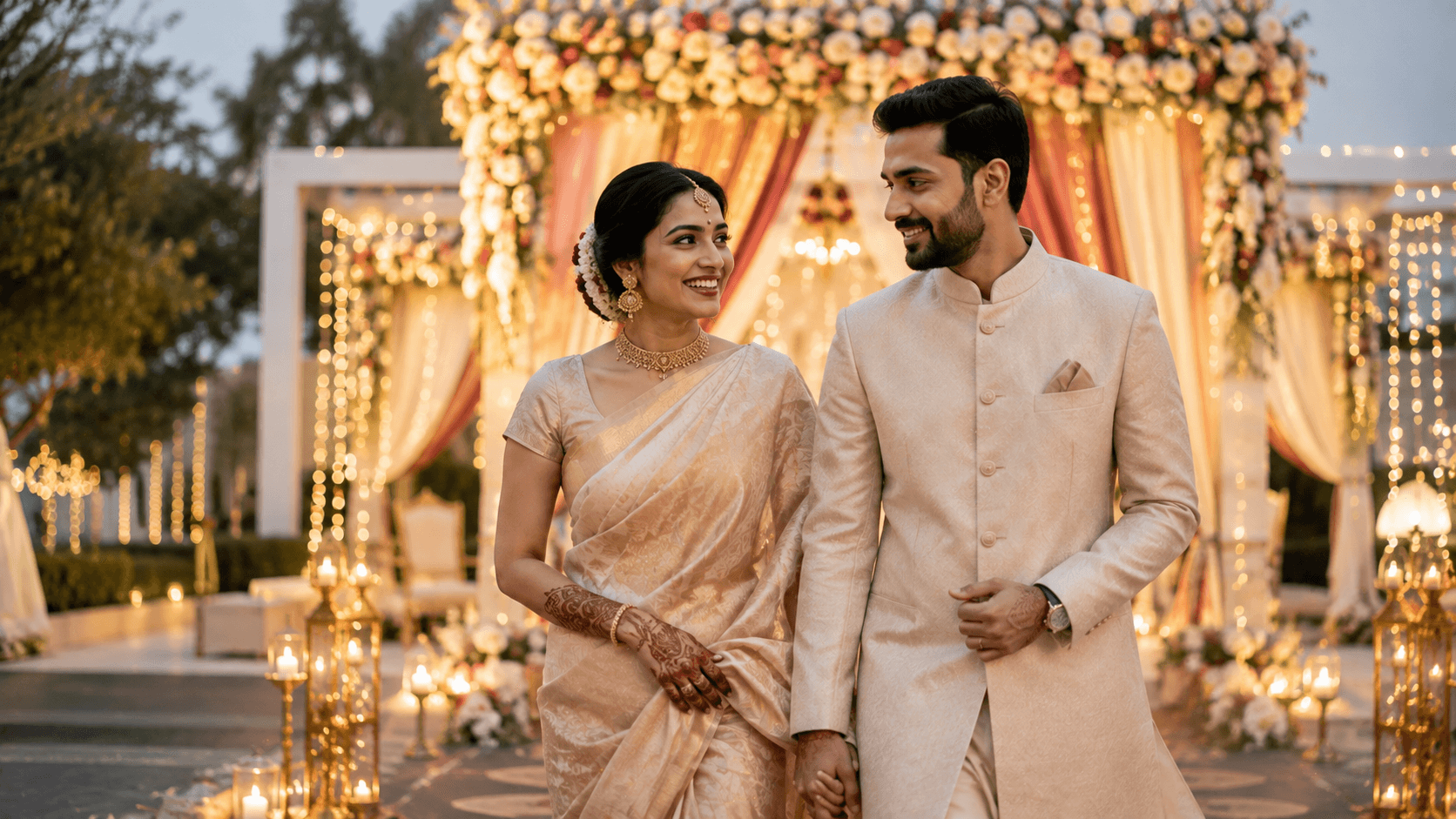
Alongside traditional ceremonies, many Indian couples today blend customs. A Punjabi–South Indian fusion wedding might include both a phere ceremony and a Nalangu. A couple from two religious backgrounds might incorporate elements from both faiths.
This section will also cover how couples adapt, reorder, or reinterpret rituals to reflect their relationship, families, and values — without discarding the customs that matter most to them.
A Living, Growing Guide
Indian wedding culture is too vast to capture all at once. This section will keep expanding, state by state and tradition by tradition.
If there's a specific state, community, or religious tradition you'd like covered first, that kind of direction shapes what gets built next.
Frequently Asked Questions
How many different wedding traditions exist in India?+
There is no single number — traditions vary by state, religion, and even community within a religion, which means India is home to hundreds of distinct wedding customs rather than one national tradition.
Do all Hindu weddings in India follow the same rituals?+
No. While core elements like the saat phere (seven rounds around the sacred fire) are widely shared, the full ritual sequence, attire, food, and pre-wedding customs vary significantly between regions — a Bengali Hindu wedding looks quite different from a Tamil or Punjabi Hindu wedding, even though all three share the same core religious framework.
What is the difference between a Hindu, Muslim, and Sikh wedding ceremony?+
A Hindu wedding centers on rituals performed around a sacred fire, most notably the saat phere. A Muslim nikah is a contractual ceremony based on mutual consent, witnessed and formally documented. A Sikh Anand Karaj takes place around the Guru Granth Sahib and includes four ceremonial laavan (hymns) the couple circles to. Each has a distinct religious basis and ceremonial structure, covered in full on their respective guide pages.
Where should I start if I want to understand my own community's wedding traditions?+
Start with your state's regional guide and, if relevant, your religion's guide — together they cover the two biggest influences on how your specific wedding traditions came to be.
Are North-East Indian wedding traditions the same as the rest of India?+
Not usually. Many communities in states like Nagaland, Meghalaya, Mizoram, and Arunachal Pradesh follow distinct tribal marriage customs that developed separately from mainstream Hindu, Muslim, or other mainland religious traditions, often shaped by local animist or Christian influences specific to that community.
Why do Indian weddings often last several days instead of one day?+
Most Indian wedding traditions treat marriage as a multi-stage transition rather than a single event — pre-wedding rituals like haldi and mehendi, the main ceremony, and post-wedding rituals like the reception or bidaai are traditionally spread across separate days, each with its own significance.
Can couples from two different regions or religions blend their wedding traditions?+
Yes, and it's increasingly common. Many modern Indian couples incorporate rituals from both partners' regional or religious backgrounds into a single wedding, sometimes performing two ceremonies or blending elements of both into one. This section will cover fusion wedding approaches in more detail as it grows.